How to identify a stamp's country and issue
Scripts, currency, designs — how to read where a stamp comes from.
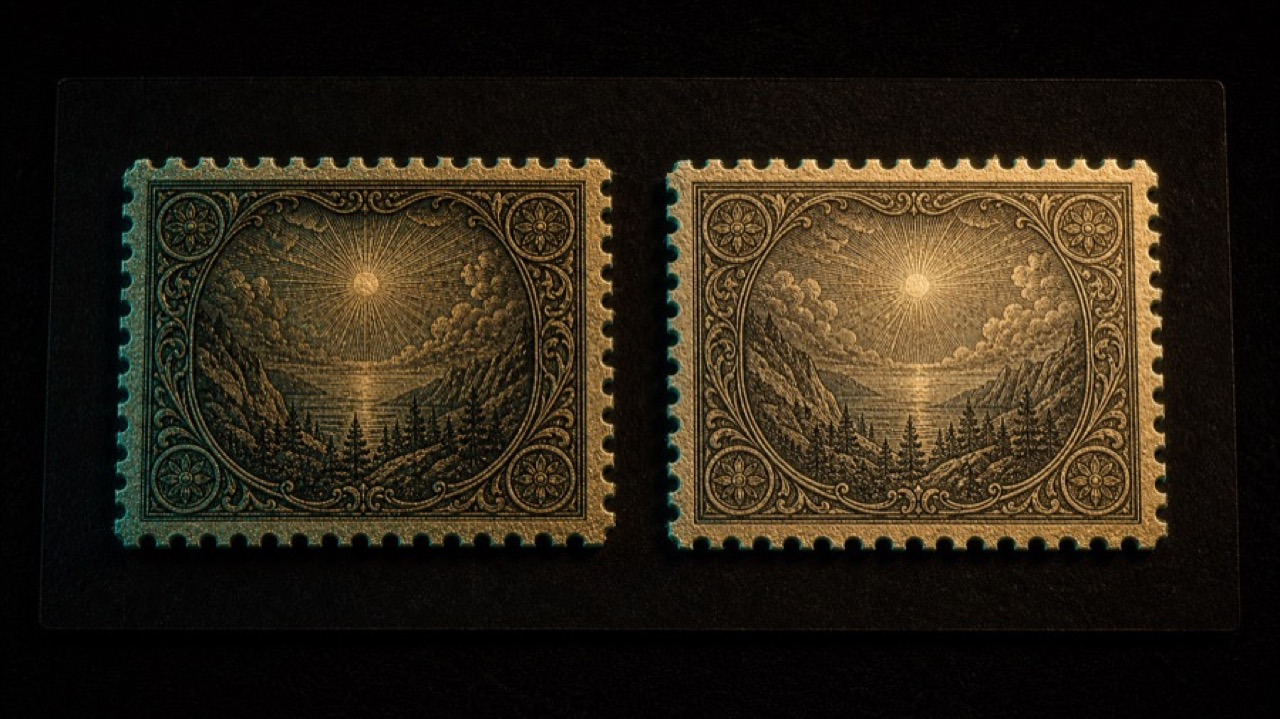
Before you can value a stamp, you have to know what it is — and that starts with two questions: where did it come from, and which exact issue is it? Most stamps tell you in plain text. The interesting ones make you read between the lines. Here's how experienced collectors pin down origin and issue, even when the obvious clue is missing.
Start with the country name
The vast majority of stamps print a country name, and the fastest identification is simply reading it. The catch is that the name is often in the country's own language or an older form: you may see the local-language spelling rather than the English one, an imperial-era name a country no longer uses, or a regional name that predates a modern border. Build the habit of recognizing these older and native spellings — a surprising number of "mystery" stamps are just a familiar country under an unfamiliar name.
Read the script and alphabet
When you can't read the words, read the writing system. The script alone narrows the field dramatically:
- A non-Latin alphabet points you toward a specific region of the world before you decode a single word.
- Distinctive character shapes can separate neighboring countries that share a script.
- A right-to-left script versus a left-to-right one is an instant filter.
You don't need to translate it — you only need to recognize the family it belongs to, then match the design against candidates from that region.
Use the currency
The denomination is a powerful clue. The currency unit printed on the stamp — the name of the cents, the fractions, the symbol — often maps to one country or a small group of historically linked ones. A face value expressed in an unusual unit can identify an origin all by itself, and a currency change over time can even help date the issue within a country.
The famous exception: stamps with no country name
Two cases trip up beginners. First, the classic stamps of one well-known country deliberately carry no country name at all — by long-standing convention they are identified instead by the monarch's profile portrait. If you find an old stamp with a royal head and no nation printed, that convention is your answer. Second, many early issues worldwide skip the name and must be read by currency, script, and recurring design motifs — a particular frame style, an emblem, or a repeated allegorical figure that a catalog ties to a specific country and period.
Narrow from country to exact issue
Getting the country is half the job. To value correctly you need the specific issue, because catalogs split designs into separately priced numbers. Work down this list:
- Design and denomination: match the picture and face value to a catalog entry.
- Color: the same design printed in different shades is often a different, differently priced number.
- Perforation gauge: measure the teeth — the same stamp can exist perforated several ways.
- Watermark: the paper's hidden mark frequently separates otherwise identical stamps.
- Printing and paper type: later reprints and changed papers create distinct listings.
Let the tool do the first pass
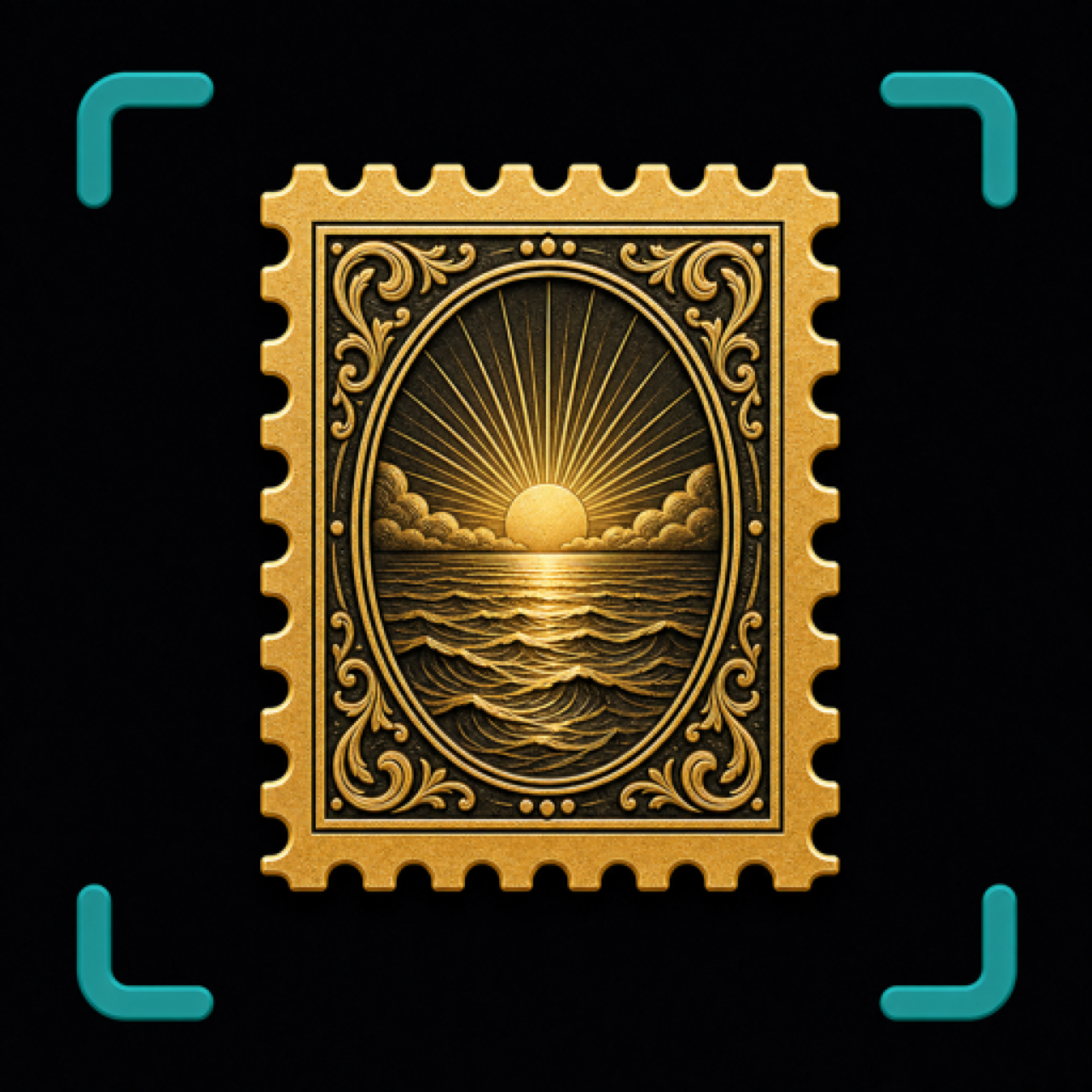
Framing the whole stamp — country, value, and perforations all in view — lets PhilLens read the design and propose the likely issue with a confidence indicator. Treat that as a strong first hypothesis: confirm it when it's right, and correct it by hand when the match is off, especially on the color, perf, or watermark splits that the eye catches better than the camera. Identify accurately and the value follows; guess the issue and every number after it is wrong.
*Reference figures are estimated market ranges only — not appraisals, expertization, or investment advice. Actual prices depend on condition, demand, and venue.*
Create an evidence record before searching
Start with a temporary item ID, a full-front photograph, and a reverse photograph only when it is already visible without altering the item. Copy every readable character in its original order; note the apparent script without guessing a translation; and record denomination, currency marks, portrait, emblem or central design, printed colors, overprint or surcharge, cancellation, and any safely known perforation or watermark information. Separate observation from inference: `visible_inscription` is what is printed, while `country_candidate` is a working interpretation. Use `UNKNOWN` for an unreadable character or unavailable reverse rather than inventing a letter, language, or country.
Keep a country-and-issue conflict log
For every country candidate, record the exact supporting clue, the source checked, access date, and any clue that does not fit. The American Philatelic Society explains that a country name may not resemble its English form and identifies Great Britain as the exception that may use the ruling monarch's silhouette. Treat that silhouette as a comparison clue, not proof from a portrait alone.
Once a country is plausible, record the catalogue path used to narrow the issue. The APS says catalogues are generally arranged by country, stamp type, and issue date, while denomination and one-color or multicolor printing can help indicate an approximate period. These are narrowing clues only. A conflicting denomination, design, overprint, perforation, watermark, or printing detail keeps the result `PROVISIONAL` or `UNRESOLVED`; it must not be forced to the closest picture. Suggested fields are `candidate_country`, `supporting_clues`, `conflicting_clues`, `catalogue_or_identifier`, `source_accessed`, `candidate_issue`, and `resolution_status`. Do not reproduce proprietary catalogue numbering, images, valuation tables, or bulk listings without permission.
Stop and escalate when evidence conflicts
If the country text, denomination, design, or printing details do not align, preserve the record and stop at `UNRESOLVED`. The APS describes stamps that can remain difficult to identify even with ordinary catalogues and catalogue descriptions. When the answer matters, send the physical item and conflict log to an appropriate philatelic specialist rather than presenting a forced match as fact.
PhilLens may use the visible design, country, and denomination to suggest a likely issue and show a confidence indicator that the user confirms or adjusts. Save that output as another candidate in the log, not as the evidence itself. Use perforations and watermarks to document those physical clues, and consult the fake-stamp warning guide before relying on a high-stakes match. AI identification cannot authenticate a stamp or replace a certified expert opinion. Any value reference depends on the exact issue, condition, demand, date, currency, and venue and is not a guaranteed sale result.
Check the latest subscription options in the App Store.
FAQ
What if there's no country name on the stamp?
Two famous cases skip the country: classic British stamps (identified by the monarch's profile) and many early issues read by currency, script, or recurring design motifs. The guide walks through the tells.